Transformers the Movie at The Temple Theater in Portland, TN
While Transformers: The Movie (1986) was originally built to sell the next wave of a hit toy line, seeing it four decades later proves that its true power lies in nostalgia—an energy that is best revived not in a sterile modern megaplex, but within the walls of a historic community theater. Stripped of modern theatrical gimmicks like Dolby Atmos and reclining seats, watching this 1986 animated classic today reminds us that a vintage film is at its best when paired with an equally vintage environment.
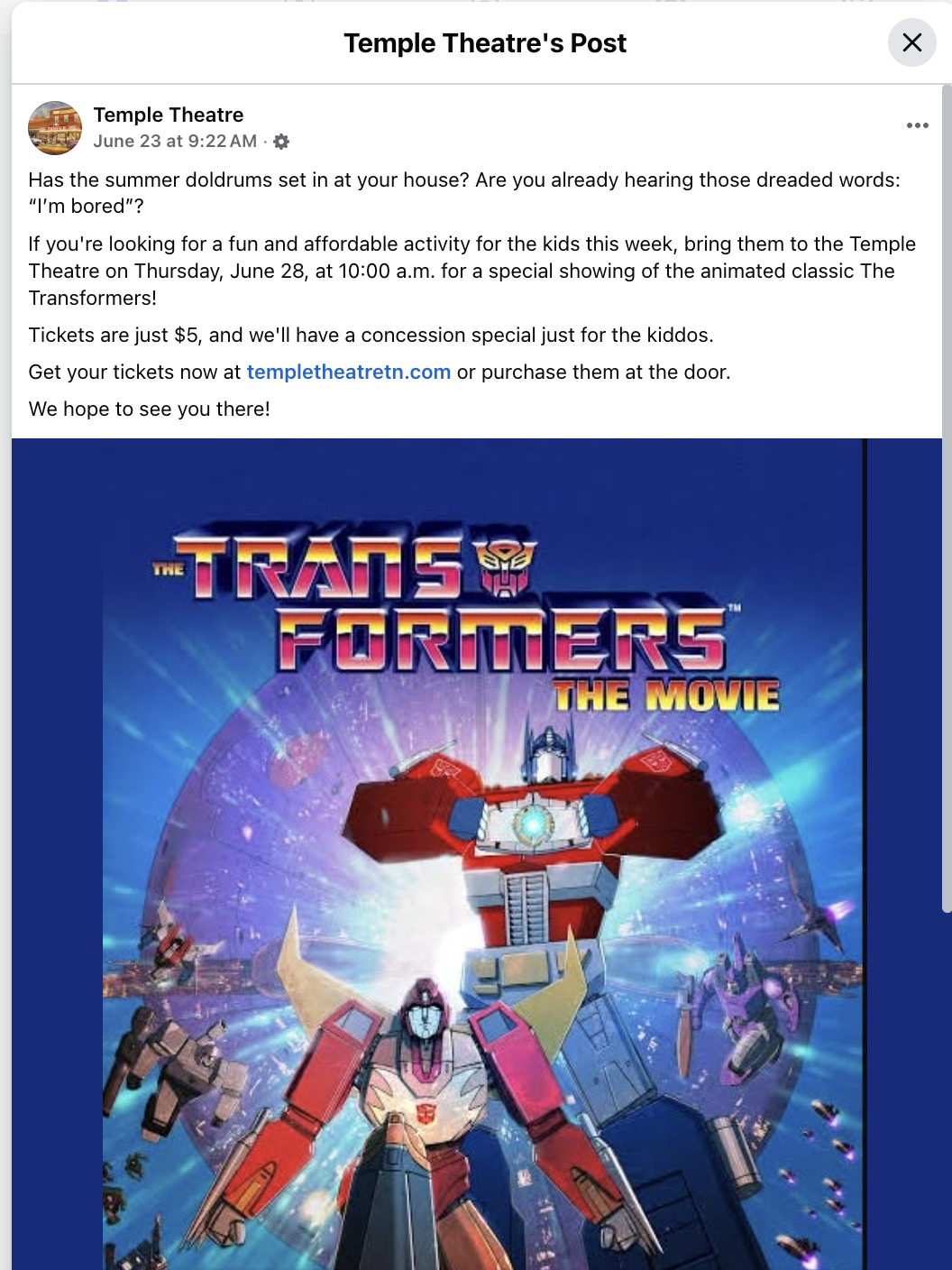
On Thursday June 25, 2026 I attended a showing of Transformers: The Movie (1986) at the Temple Theater in Portland, Tennessee. It was part of a summer series geared primarily towards children. The ticket price was $5 and seating was general / first come, first choice. I was no stranger to the film itself.
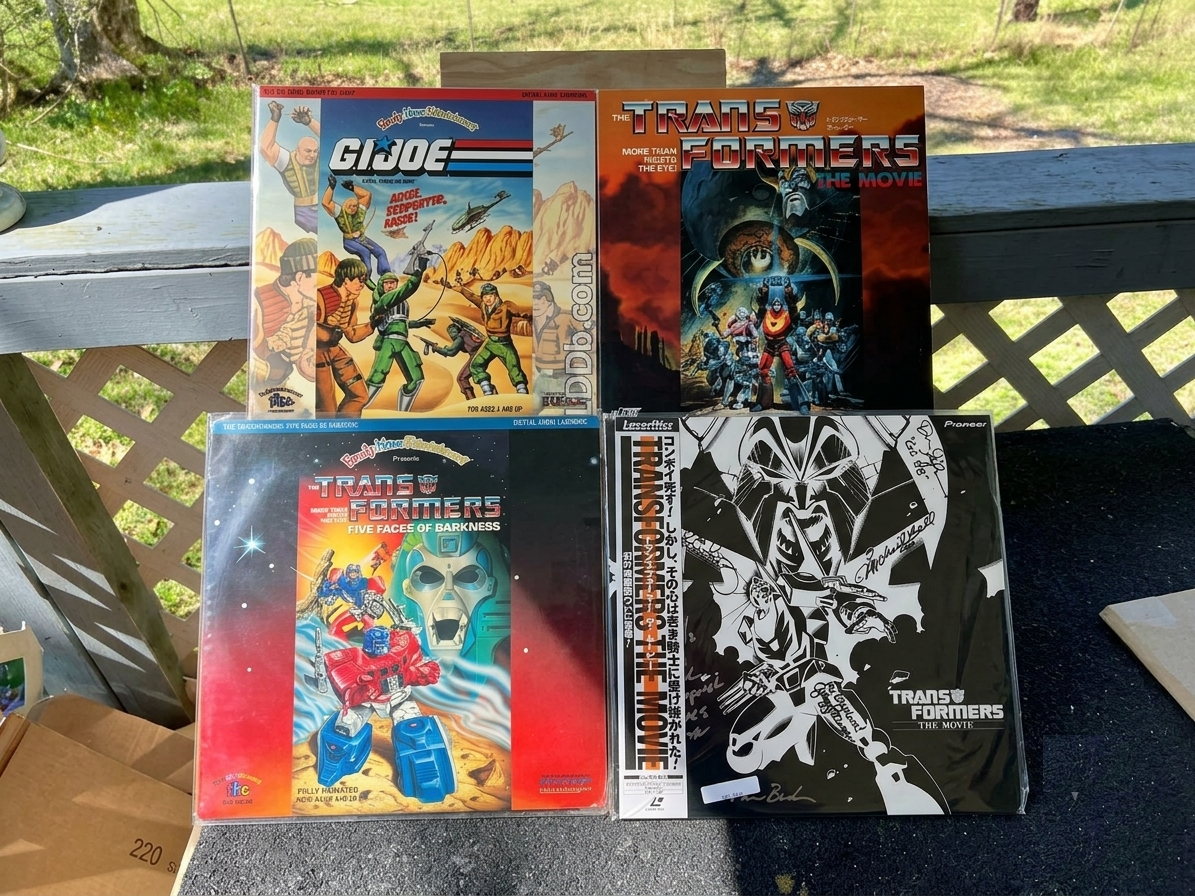
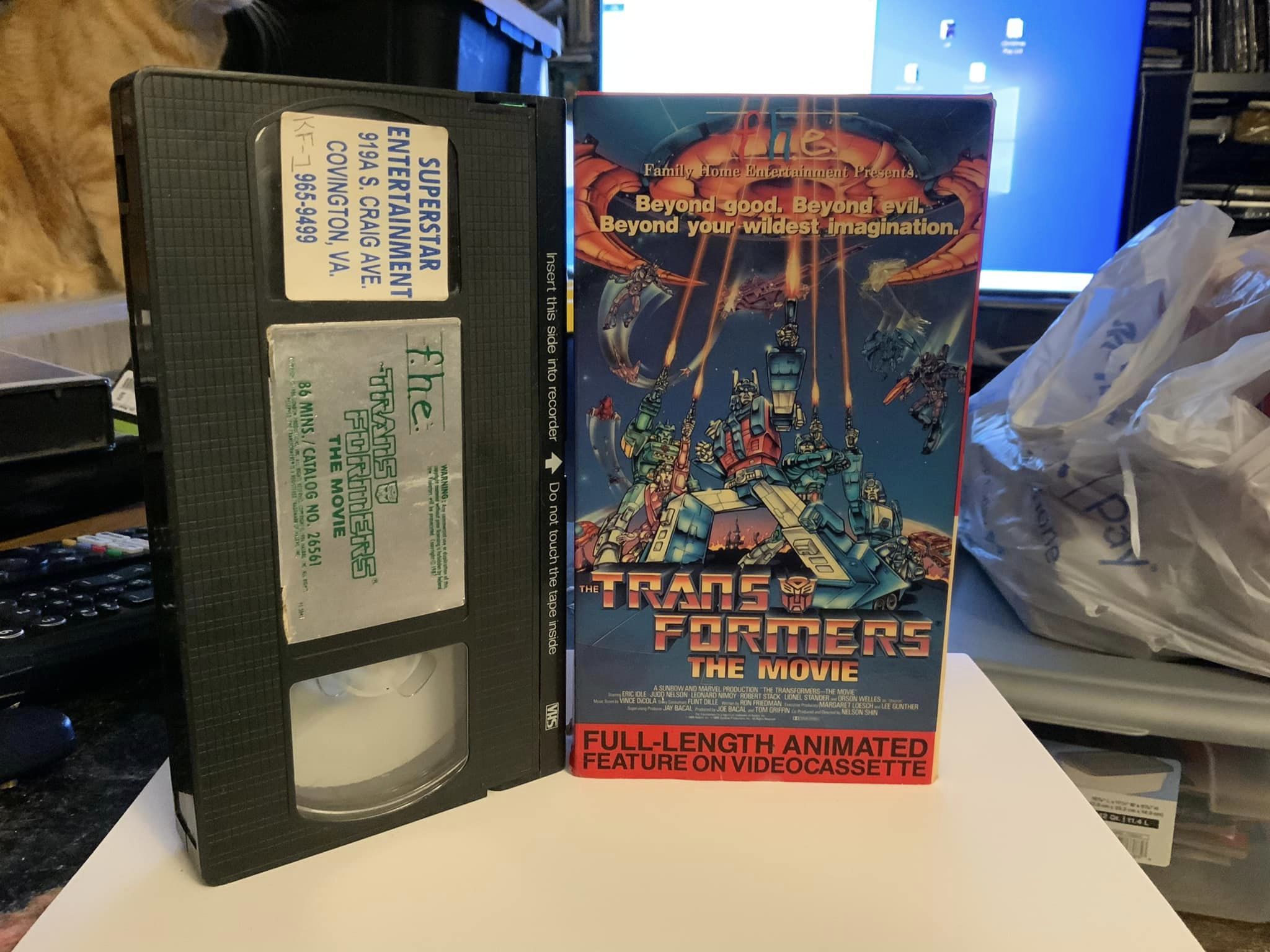
I own the film on every format imaginable – the first VHS release (Family Home Entertainment, SP, Silver / Green label), Japanese Laserdiscs (Pioneer, Hillcrane – yes, THAT Hillcrane), subsequent VHS releases (Avid, Rhino, MCA, Malofilm), DVD (Rhino, Sony, Shout Factory), Blu Ray (Madman, Shout Factory), and 4K (Shout Factory). I first saw it in the theater in August 1986 (for a whopping $3.71 ticket price!).
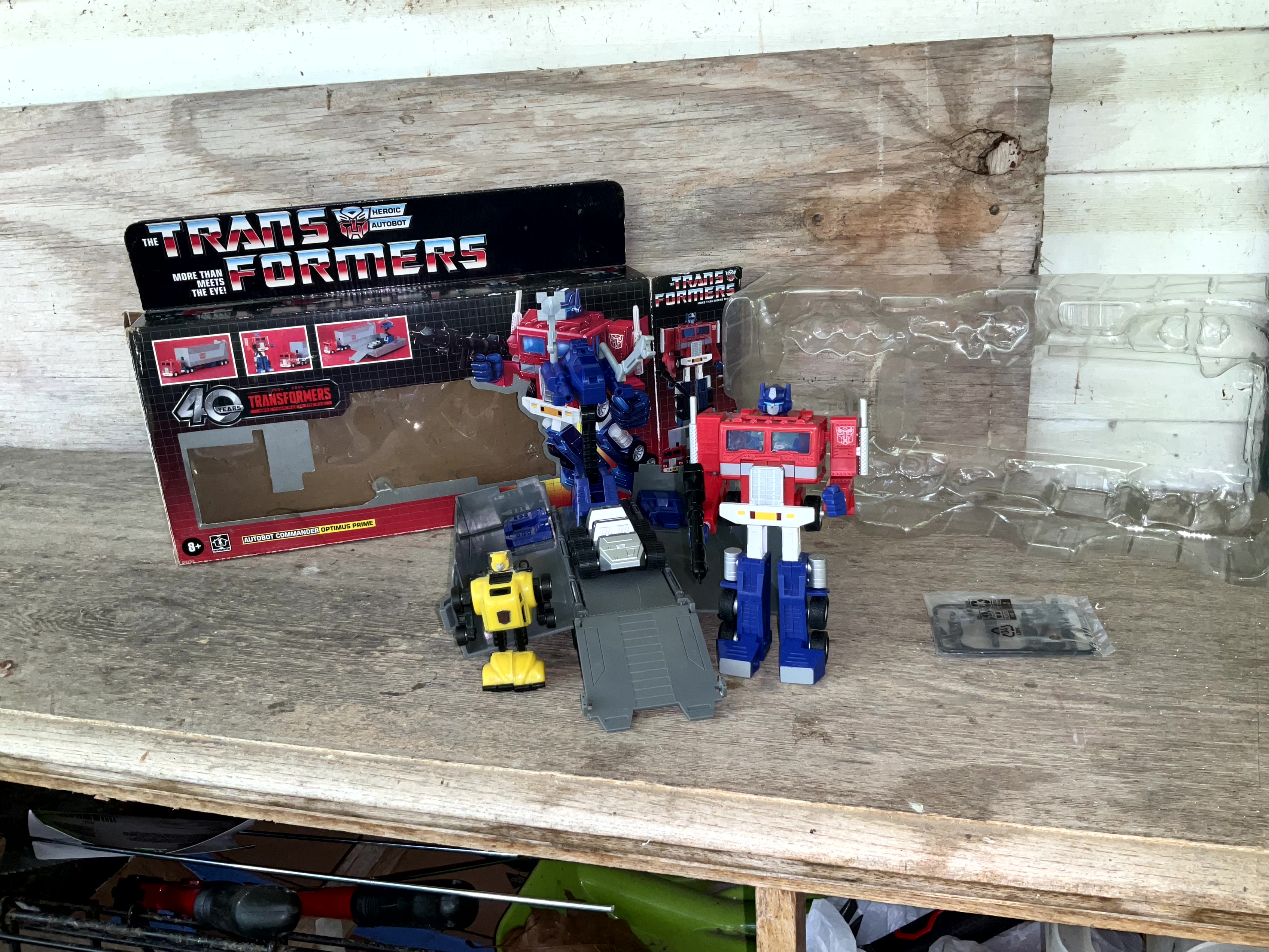
In the 1986 theater, the film was in context of two seasons of television episodes and a toy line that was on store shelves. The idea was to dispense away with the 1984-1985 toy line and transition to the 1986 toy line with a third season of the television series. In a few short scenes your entire toy collection was wiped out, new toys introduced and with it a new Christmas list. The film was an experience in 1986 but so was this particular theater in 2026.
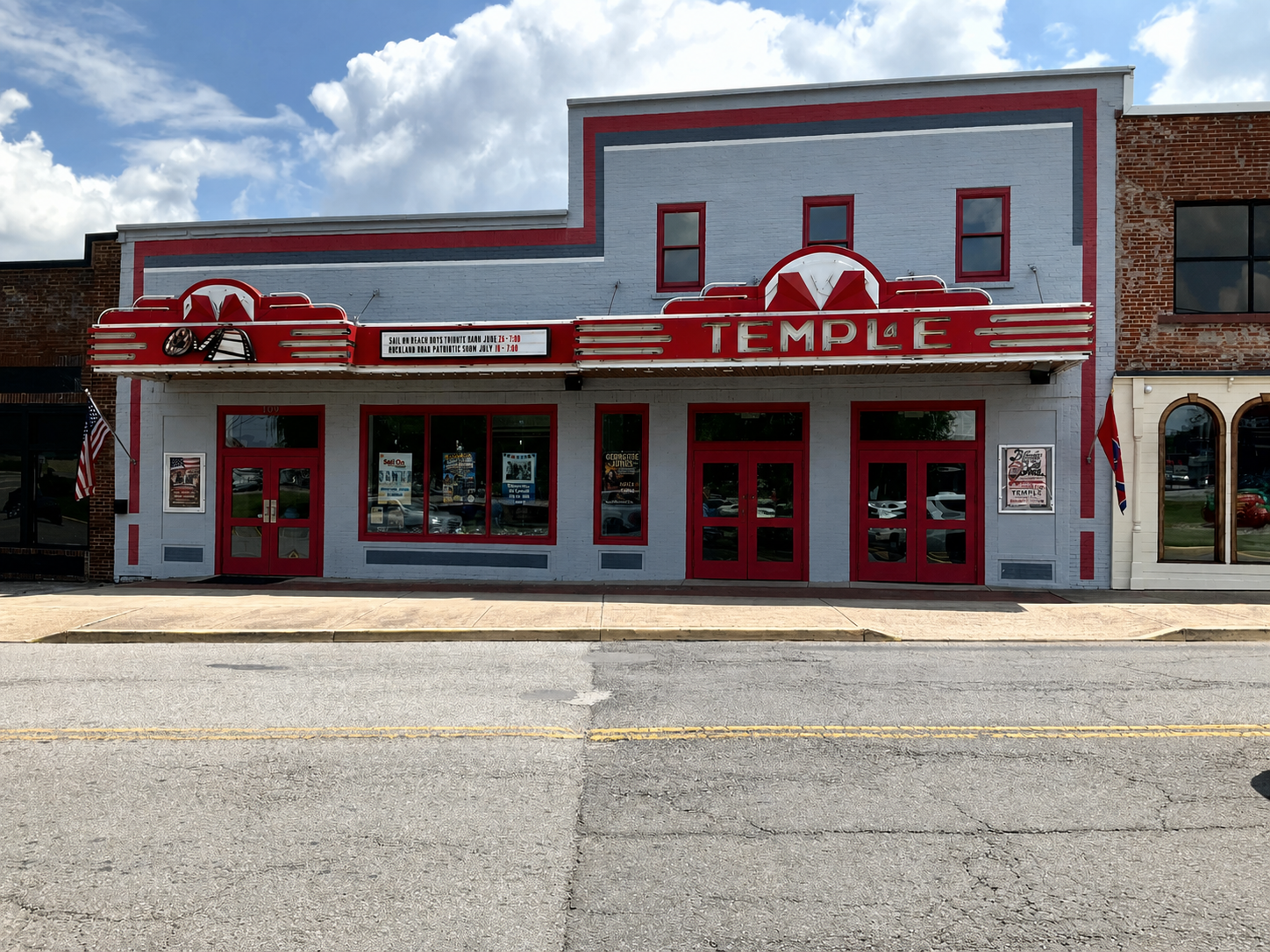
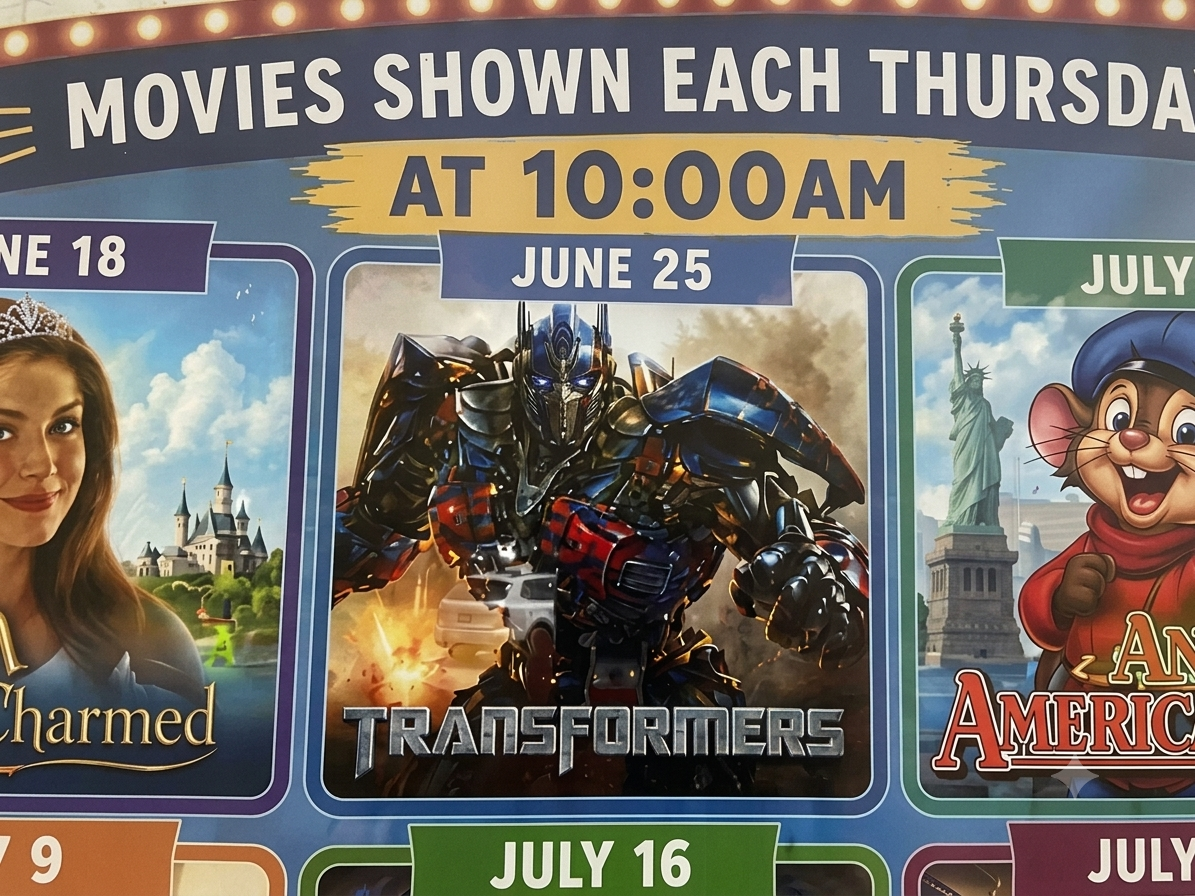
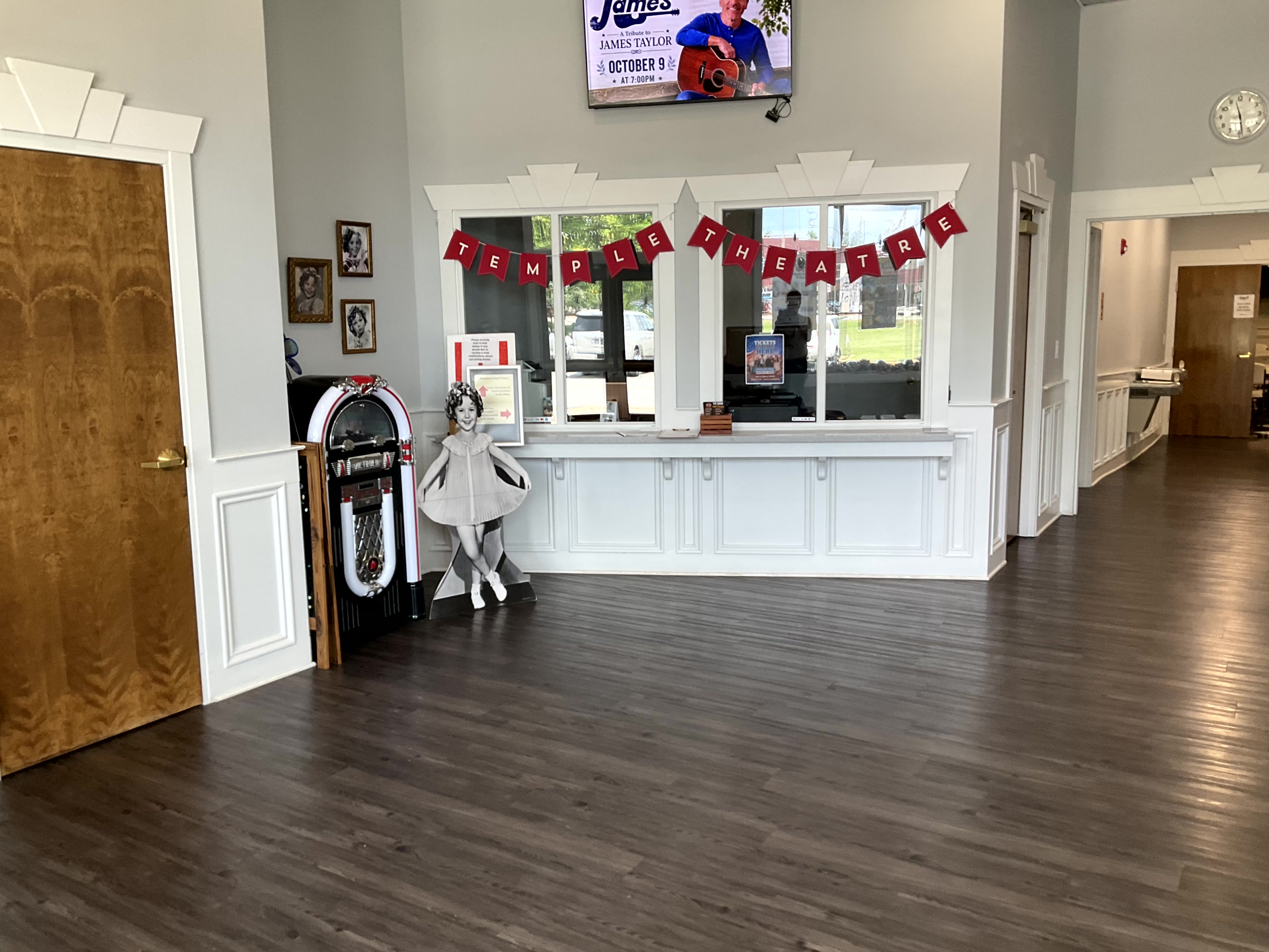
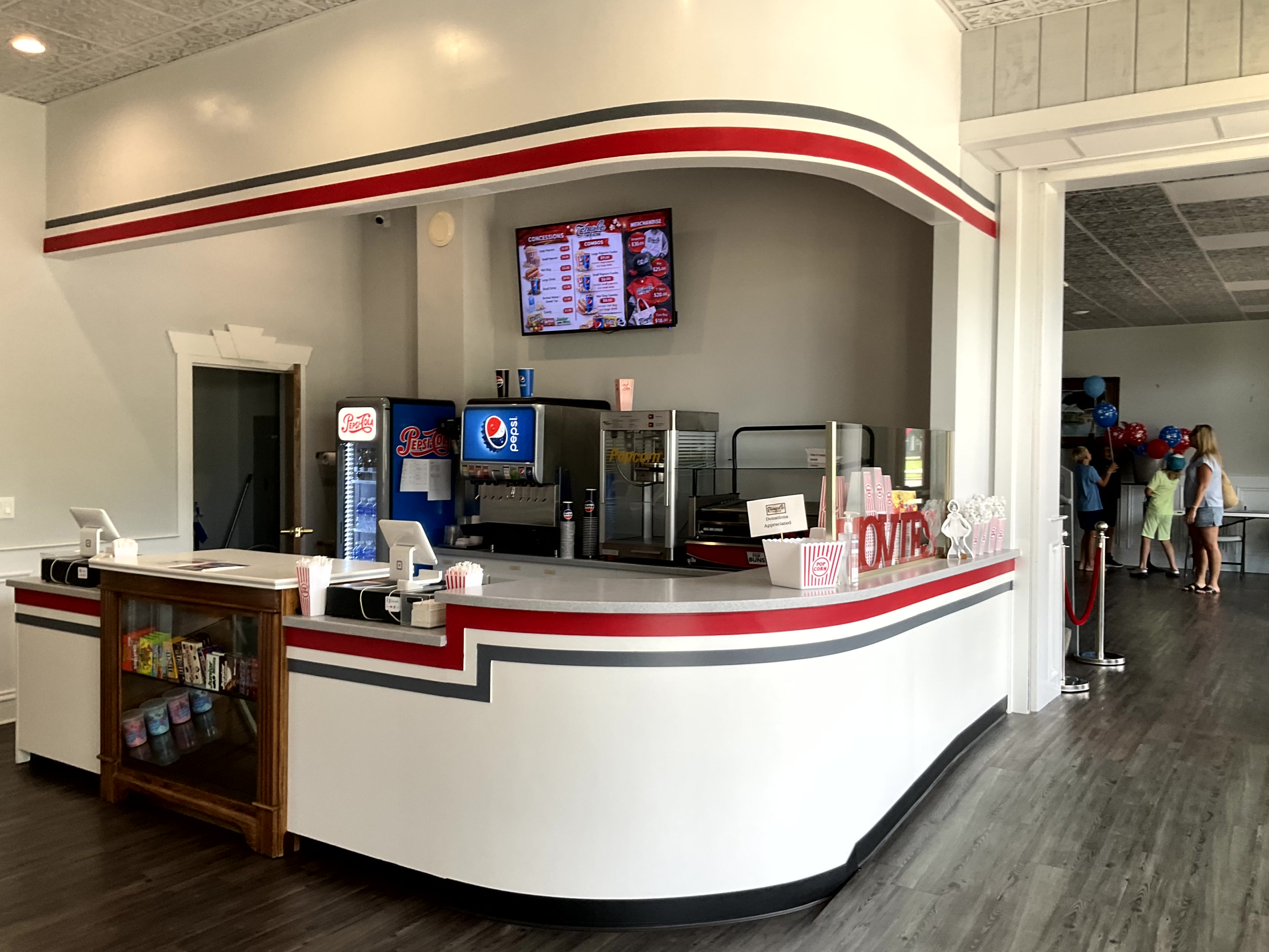
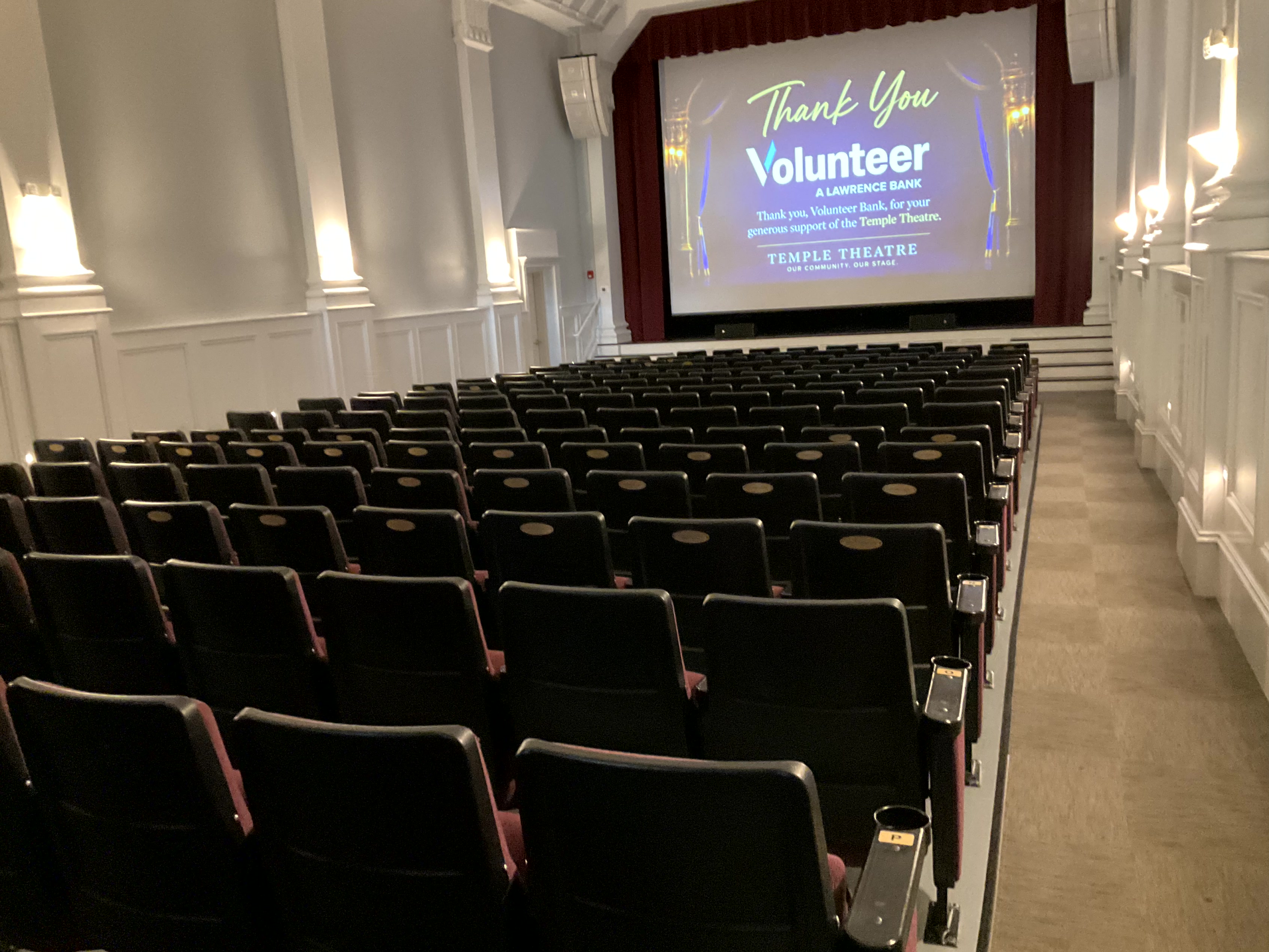
The theater itself is an experience. The outside has a very vintage look, as does the lobby. I was greeted and asked by two volunteers if I needed help. Being a childrens movie I guess a GenX Transformers fan wasn’t the expected audience. I let them know I was there to see the movie and that I saw it theatrically in 1986. They showed me to the theater seating and took the time to share about the theater.
The theater itself is run by a 501c3 non profit. It was explained to me that the staff is all volunteer and the theater underwent a major renovation. They host live music performances and are trying summer family movies. They shared that running the non profit is a challenge and that performers are expensive. It was nice of them to share before the film started.
Before the film started, kids and parents arrived. There were roughly 20 people, about 4 parents and 16 kids if I counted correctly. All the kids were much younger than I was when I first saw the film. All the kids were with parents – where by contrast this was the second film I’d seen without my parents and the first without ANY parents (I saw “Splash” but with a friend and their parents). The audience was very different here today.
I couldn’t help but wonder how the film would go over without 2 seasons of TV episodes which we had in 1986 going into the film. I also remembered the film had several ‘swear words’ so I was interested to see the reaction, but these were not the only noticeable things.
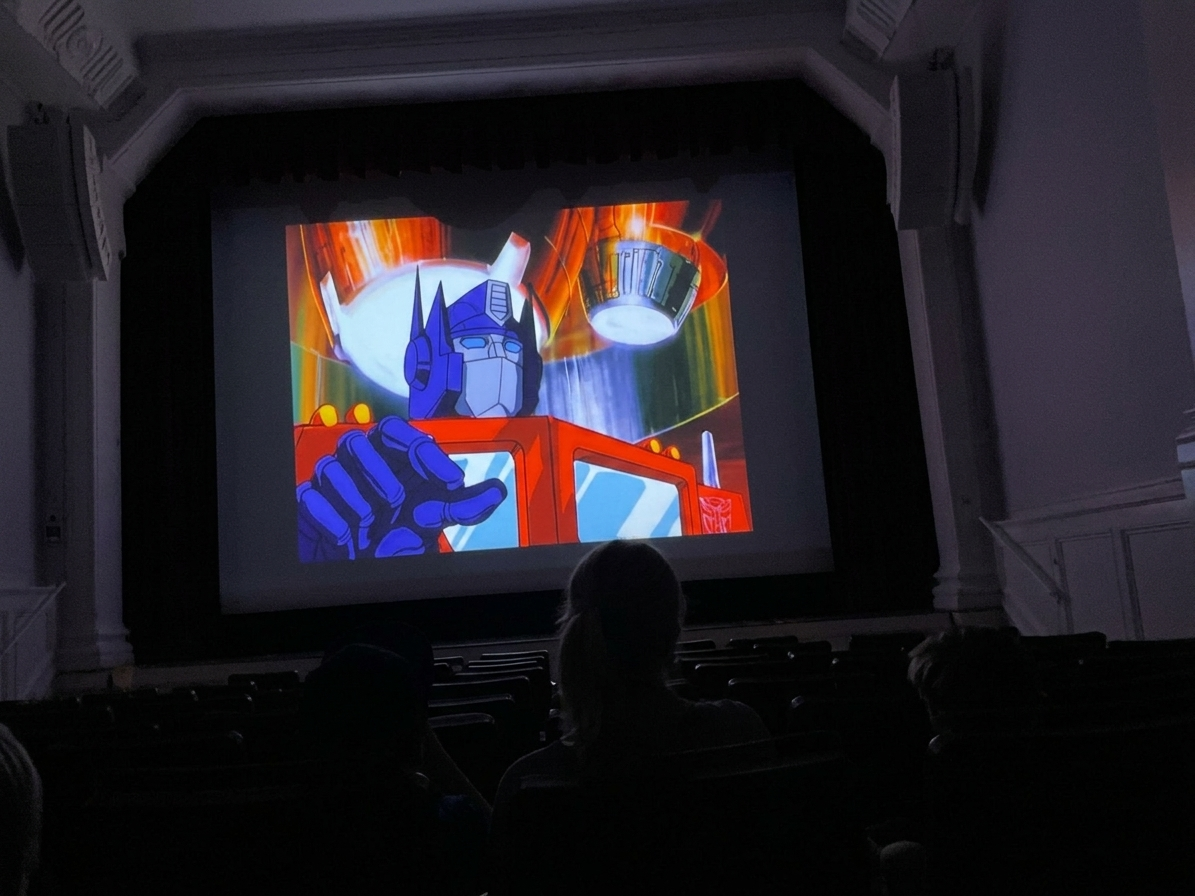
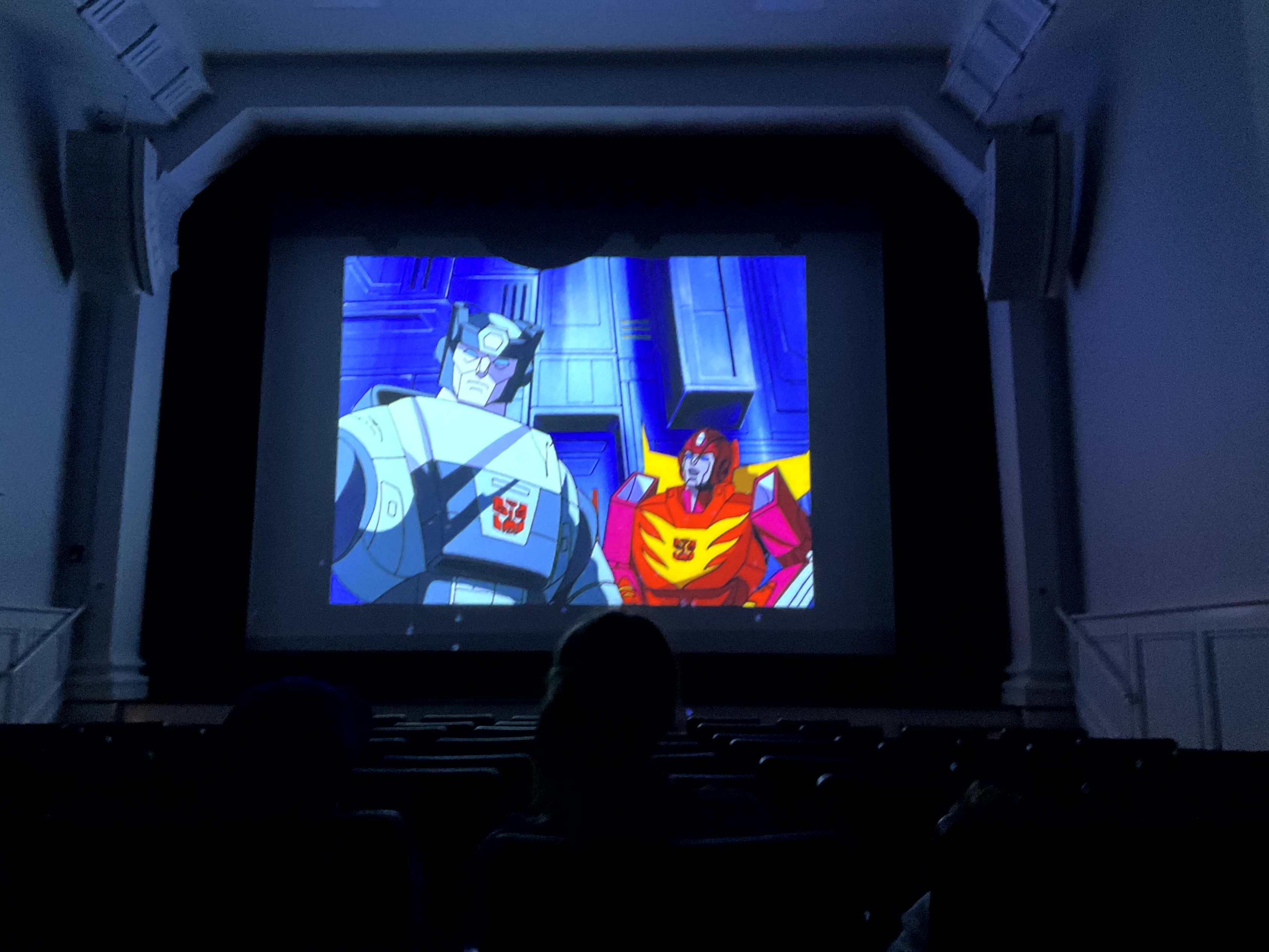
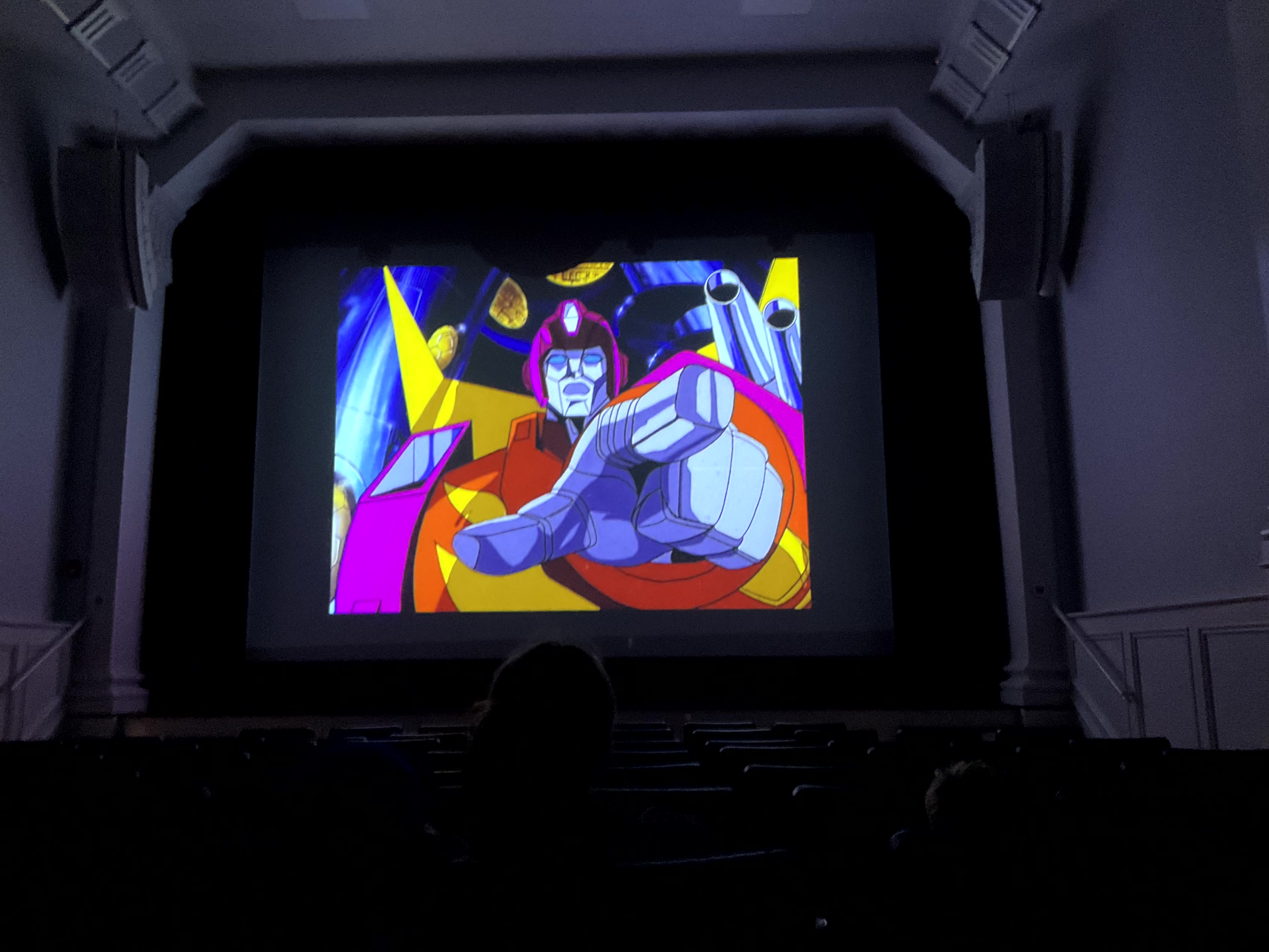
The first thing I notice was the film was shown in Pan and Scan / 4:3 (I shot pictures guilt-free since some parents were on their cell phones the whole movie). This was unusual to me. The film was shot in 4:3 and matted for widescreen in 1986 however 4:3 maximizes what you see based on how it was shot so to me it’s the definitive way to see it. It wasn’t the first time I’d seen it in 4:3.
4:3 was widely available on the VHS and Laserdisc release as well as the Shout Factory Blu Ray release. I’d never seen it 4:3 on the a big screen before. It was running from the Shout Factory Blu Ray on a projected image at 720p. The projector display resolution appeared briefly during the film as it moved along but there wasn’t any information on the sound displayed.
The theater’s sound was even and not overwhelming. As the staff had mentioned they host live events, it was nice to have the film’s audio in a non-immersive format. The original theatrical was Dolby Stereo 1986, not sometimes intense and and unnatural sound of Dolby Atmos in theaters today. Hearing the audio of the film in a community theater seemed closer to the 1986 theatrical experience than I expected. I’m sure parents appreciated that.
Speaking of parents, as the film rolled on, so came the swear words, which were intense in 1986. They did get a reaction from the two adults in front of me. I also noticed I was the only one childless in the room. The death of Optimus Prime and the other 1984 toy line characters however didn’t seem to have the impact it did in 1986, probably due to the lack of context. In 1986 kids were seeing two years of their toy closet decimated by film’s end where as today there was a steady stream of childrens’ laughter throughout the showing, not the sheer horror of a toy line being wiped out from beginning to end.
By the end of the film showing the kids applauded. I didn’t expect that reaction but to me it was unexpected and very different than 1986 where we all left in shock, so the kids reaction to the film seemed favorable. In 1986 there was more to come however.
As the film ends, it sets up for a continuation. That continuation would occur in 1986 with the third season of the Transformers. I felt bad for these kids that they would not be able to see what happened afterward – although the episodes are readily available on YouTube. The other side of it is this was a childrens movie series at the Temple Theater and likely more of inexpensive summer child care than something the children will remember much past today. It was nice to see the film in a theater on the 40th anniversary.
Seeing the film in a theater isn’t new to me – I saw it at two Fathom Special Events – one in 2018 and one in 2021. It’s coming again in September 2026 to Fathom. It was nice however to see it in a theater with kids, not adult Transformer fans which is what the Fathom Special Events attract. The community theater didn’t have Dolby Atmos, reclining seats or drink holders – and neither did theaters in 1986. In the end, the Temple Theater truly created a vintage experience for vintage movie.