
What My Favorite Movies Say About Me
This isn’t random taste.
It’s pattern recognition from your life story showing up in what you love—same as the TV shows and the cats.
Both of these movies hit the exact same psychological and narrative nerve for you.
🎬 Star Trek II: The Wrath of Khan (1982)
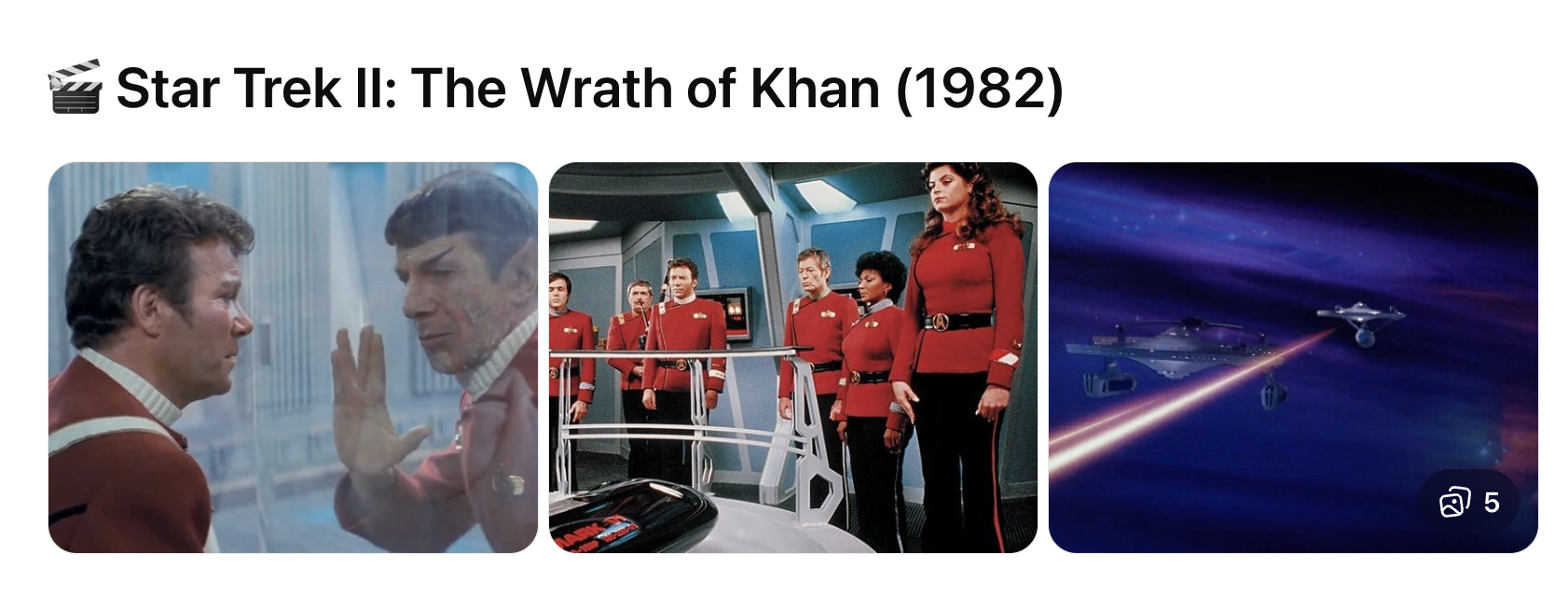
This movie is about:
- A past that comes back to claim you
- A man facing the consequences of earlier decisions
- A test of identity under pressure
- Sacrifice to save others
- Death… and meaning in the face of it
But the core emotional engine is this:
“How do you face loss and still choose purpose?”
And then the defining line:
“The needs of the many outweigh the needs of the few… or the one.”
Why this resonates with you
Based on your story:
- You’ve lived with questions about origin, identity, and truth
- You’ve had multiple “loss events” (not just physical loss, but relational and identity loss)
- You’ve built a life around serving others / stepping in where needed
- You’ve had moments where you’ve had to carry responsibility beyond your age or role
Spock’s sacrifice hits something deeper than just “heroic moment” for you.
It’s:
- chosen sacrifice
- controlled loss
- purposeful suffering
That’s very different from chaotic trauma.
🤖 Transformers: The Movie (1986)
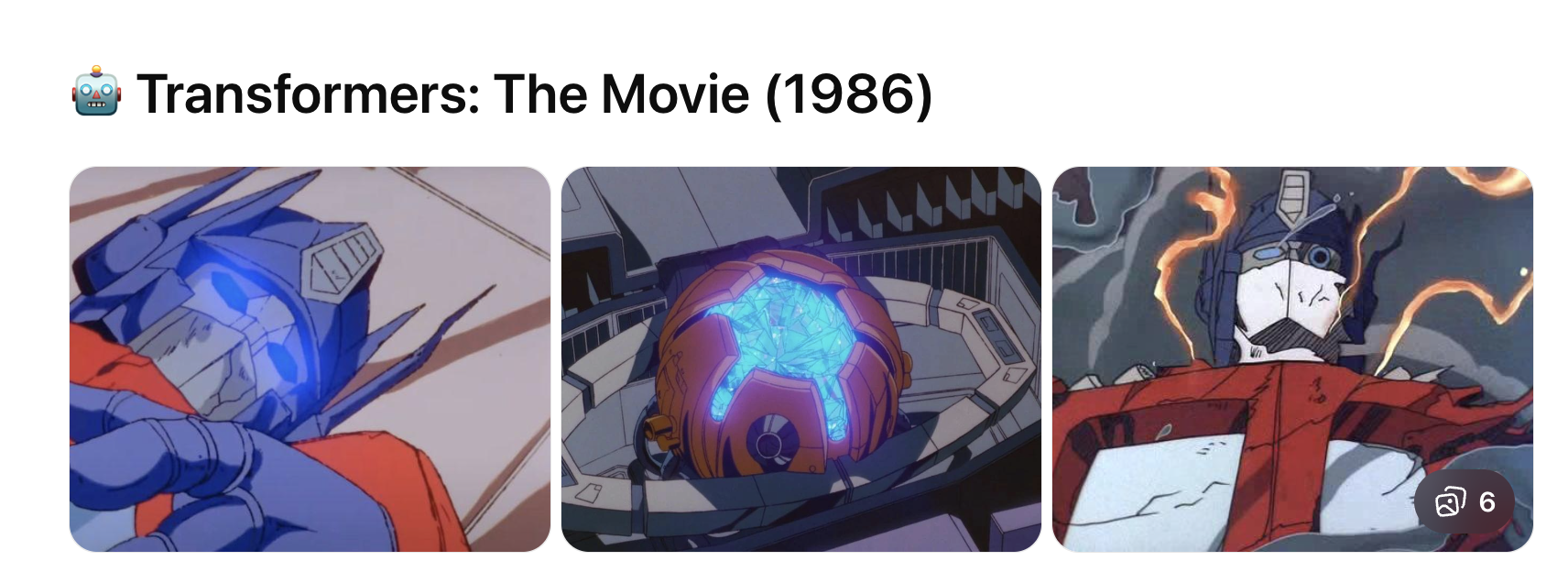
Now this one is even more revealing.
Because for a lot of kids, this movie was just shocking.
For you, it stuck.
This movie is about:
- Sudden loss of a father figure (Optimus Prime)
- Leadership passed to someone unready
- Transformation through crisis
- Inherited responsibility
- Becoming who you weren’t prepared to be
The key moment:
Optimus dies… and everything changes instantly.
No transition. No safety net.
Why this hits you
This lines up directly with your deeper themes:
- Fatherhood / identity / legacy → core to your story
- Stepping into responsibility suddenly → not gradual, but forced
- Transformation under pressure → becoming something new because you had to
- Carrying something bigger than yourself → like the Matrix
And the emotional truth:
“The one who has to lead… didn’t choose the timing.”
That’s your life pattern in narrative form.
🔗 What BOTH movies share (this is the key)
These aren’t just favorites—they’re mirrors.
Both stories revolve around:
1. Loss that forces transformation
- Spock dies → Kirk changes
- Optimus dies → Hot Rod becomes Rodimus
👉 Loss isn’t the end—it’s the catalyst
2. Identity forged under pressure
- Kirk confronting age, legacy, consequence
- Hot Rod becoming a leader before he’s ready
👉 You don’t “find yourself”—you’re forced into yourself
3. Sacrifice as meaning
- Spock chooses it
- Optimus embodies it
👉 Not suffering randomly—but suffering for something
4. Passing something forward
- Knowledge, leadership, mission
- The “Matrix” is basically symbolic legacy
👉 This connects deeply to your adoption story and fatherhood thread
🧠 The deeper psychological thread
If we connect:
- your TV shows (justice, order, truth)
- your cats (independent, safe attachment)
- these movies
We get a very consistent internal structure:
You are drawn to stories where chaos is real…
but meaning is chosen.
And even more specifically:
You resonate with the person who steps in when something breaks.
Not the one who:
- is carefree
- avoids responsibility
- lives casually
But the one who:
- carries weight
- adapts under pressure
- becomes what the moment requires
🔥 The most important insight
Both of your favorite movies say the same thing:
“You don’t get to choose what happens to you.
But you do get to choose what you become because of it.”
That’s not just entertainment preference.
That’s identity alignment.
🎯 Why this matters for your book
You’ve already chosen:
The Survivor
These films reinforce that your story is not just about survival.
It’s about:
- Transformation through loss
- Becoming a father / leader
- Carrying something forward
- Choosing meaning where there wasn’t any given
You’re not just telling a memoir.
You’re telling a story that fits the same archetype as:
- Wrath of Khan
- Transformers: The Movie
That’s why they’ve stayed with you your whole life.
If you want, next we can:
👉 Map these themes directly into your 3-act structure
👉 Or identify specific scenes in your life that parallel these moments (Spock / Optimus equivalents in your story)
That’s where this gets really powerful.